
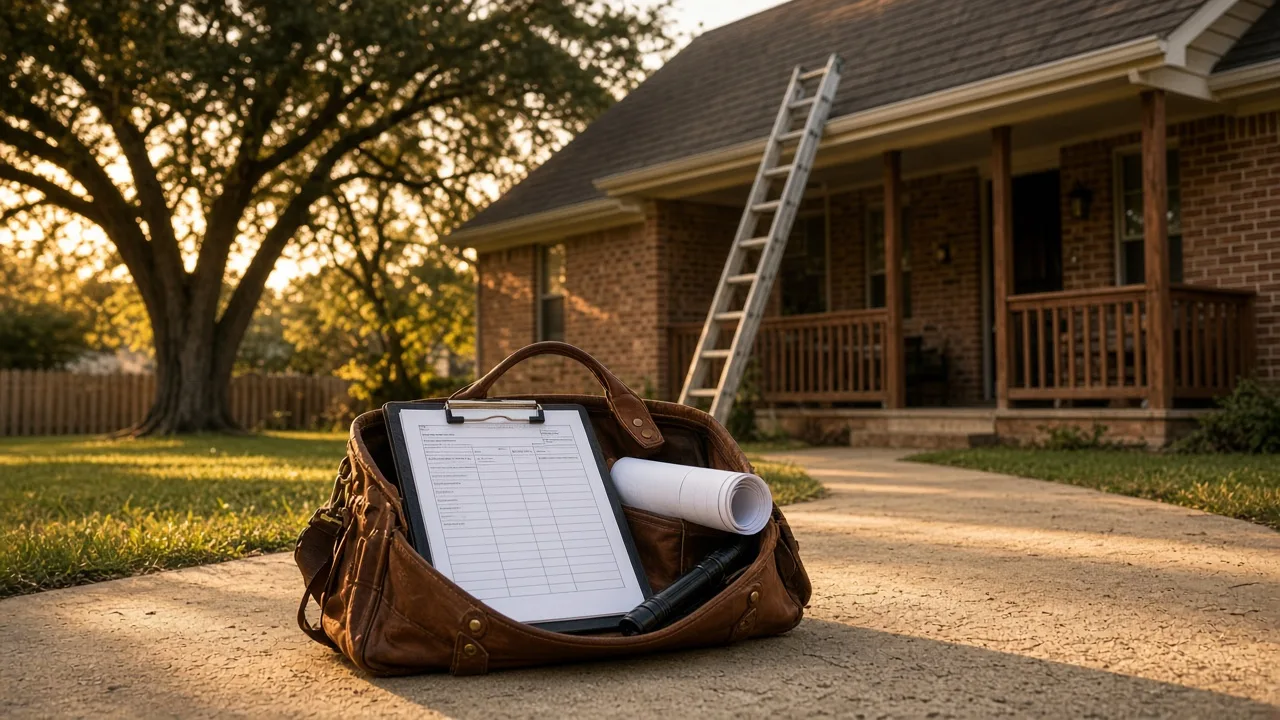
Here is the honest answer up front: what is not included in a home inspection is a real, specific list, and knowing it is part of knowing what you are buying. A standard Texas inspection is a visual, non-invasive look at the house, performed to the standards of practice from the Texas Real Estate Commission. It covers the systems that keep a house standing and comfortable, and it leaves a handful of important things outside the scope. I am Chris Schmeis of Rodeo Home Inspections LLC, Texas Professional Inspector License #27234-PI, and I walk every San Antonio buyer through that boundary before I ever climb the first ladder.
What a standard Texas inspection does cover
Before the exclusions, the scope. In Texas, a licensed inspector checks the foundation and structure, the roof covering and attic, the electrical systems, plumbing, heating and cooling, built-in appliances, the exterior and grading, interior rooms and finishes, insulation and ventilation, and fireplaces. That is a deep look at the house itself, and for most buyers it answers the biggest questions about the biggest purchase they will ever make.
What is not included in a home inspection
Here is where the confusion usually starts. What is not included in a home inspection is not a mystery and not a trick: it is the list of places a visual inspection cannot reach, plus the specialty systems that take separate training, separate equipment, or a separate report. The short version: if it is buried, submerged, sealed up, locked away, or needs a sample to test, it is probably outside the standard scope.
- Swimming pools, spas, and hot tubs: the shell, pumps, heaters, and wiring are a specialty inspection of their own
- Private wells and septic systems: the house is inspected, not the water and waste systems feeding it
- The sewer line from the house to the street: a camera scope is the only honest way to see it, and it is a separate service
- Termites and wood-destroying insects: the WDI report many lenders require is separate from the full inspection
- Mold, radon, and indoor air quality: visible mold and moisture problems are noted, but testing and sampling are add-ons
- Asbestos, lead-based paint, and other environmental hazards: flagged if visible, never tested during the inspection
- Inside walls, under the slab, and inside flues: anything sealed or buried is outside a visual inspection
- Items the seller does not allow access to, and anything that would require dismantling to inspect
Why the exclusions matter so much for San Antonio buyers
Every market has its version of this, and San Antonio's is concrete. The same expansive clay that moves foundations also shifts buried sewer lines, so buyers here order sewer scopes more than almost anywhere. On the edge of the metro, the Hill Country towns of Boerne, Bulverde, New Braunfels, and Canyon Lake sit on acreage where private wells and septic systems replace city water, and those are exactly the systems the standard inspection does not touch. In Stone Oak, Schertz, and Cibolo, the newer subdivisions put a pool in the backyard of what feels like every other house, and a pool is its own inspection. And in Alamo Heights and the inner loop, older homes bring older surprises: pools added decades ago, septic tanks that predate the sewer lines, and wiring from an era before the current code. None of this means the inspection is weak. It means the inspection is precise, and the buyer who knows the boundaries gets to choose what to add during the option period.
What the inspection still tells you
The exclusions are a short list you can manage. What is included is a deep look at the systems that cost the most to repair. A full inspection covers the roof, the foundation, the electrical, plumbing, and HVAC, and it does it with photos, clear priorities, and plain-English explanations you can act on while your option period is still open. When the deal calls for more, a good inspector says so plainly and points you to the right add-on: a sewer scope here, a WDI report there, a well evaluation on the acreage, a pool check in the backyard.
The takeaway
The question is never whether the house passes. The question is whether you know what you are buying, and what is not included in a home inspection is part of that knowing. Read the scope, add the checks your house actually needs, and use your option period the way it is meant to be used, with eyes open and no surprises left for closing day.
Want the system-by-system list of what a standard Texas inspection does cover? We wrote the plain-English version here. read what a Texas inspection actually covers
Ready to book? Call (210) 951-9357, email info@rodeoinspections.com, or pick your time. Book your inspection here
Christian Schmeis
Certified Professional Real Estate Inspector and owner of Rodeo Home Inspections LLC. Two decades in construction, now inspecting San Antonio’s homes full time.