
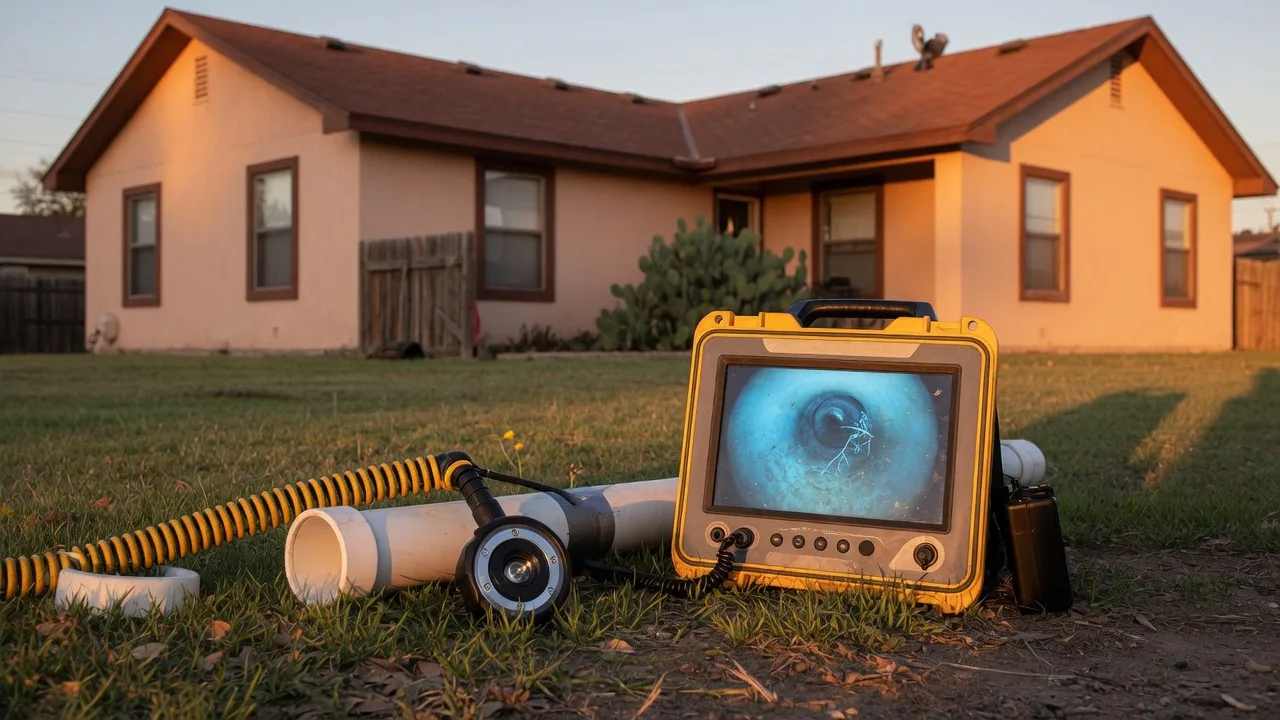
A sewer scope inspection is a camera inspection of the sewer lateral, the pipe that carries the house's wastewater to the city connection, and it is one of the smartest add-ons a San Antonio home buyer can order. The standard home inspection looks at the plumbing you can see: the fixtures, the drains, the water heater. The sewer scope looks at the pipe you cannot see, the one buried in the yard, and records the inside of it from the house to the street. This note is about what the camera sees, why it matters in San Antonio, and when to order one.
What a sewer scope inspection is
A sewer scope is exactly what it sounds like: a small camera on the end of a flexible cable, fed into the sewer line through a cleanout or a drain, that records the inside of the pipe as it travels toward the city connection. The inspector watches a live video feed, notes the condition of the pipe, and flags anything that looks wrong. The result is a recorded look at the line that carries everything out of the house, buried and out of sight, which is the one part of the plumbing a standard inspection cannot see.
Why it matters in San Antonio
San Antonio has a lot of older housing stock, and the sewer lines in many of those homes were installed with materials that do not age gracefully. Clay tile, cast iron, and Orangeburg, a tar-impregnated fiber pipe used in the mid-1900s, all show up in older neighborhoods, and each one fails in its own way. On top of that, the same expansive clay soil that moves foundations also moves sewer lines: it swells when it rains and shrinks in the drought, which can shift, crack, or sag a buried pipe over time. And tree roots, always thirsty in a Texas summer, find their way into any crack or loose joint and grow into the line. All of that happens underground, quietly, until a line backs up or collapses.
The same clay soil that moves San Antonio foundations moves buried sewer lines too. We wrote about how that ground behaves under a slab: Why San Antonio foundations crack, and when to worry
What the inspector looks for
The camera does not just confirm the pipe is open. It reads the condition of the line and documents the things that shorten a sewer's life:
- Cracks and fractures in the pipe, from hairline to structural
- Offset joints, where one section of pipe has shifted out of line with the next
- Tree-root intrusion, roots that pushed through a joint or crack and into the flow
- Bellied pipe, a sagging section where waste and water slow down and settle
- Scale and blockages, mineral buildup and debris narrowing the pipe
- Signs of an older line, like clay, cast iron, or Orangeburg, that may be nearing replacement
When to order one
Order the sewer scope during your option period, as an add-on to the standard home inspection, and before your due diligence deadline. The option period is the only window where you can act on what the camera finds: ask the seller to repair or replace the line, negotiate a credit, or walk away. Once you close, a sewer line becomes your problem, and replacing one runs through the yard, the sidewalk, and sometimes the street. Adding a scope to the same visit as your inspection keeps everything on one schedule and one report timeline.
How it completes the inspection picture
A sewer scope does not replace the home inspection; it completes it. The inspection gives you the full condition of the house above the ground, and the scope gives you the condition of the line below it. Together they are the whole story, and the results come back the same way: documented in the inspection report, with the video, stills, and a plain-English read of what the camera saw and how urgent it is. If the line is clean and sound, you close with one less unknown. If the camera finds trouble, you find out inside the option period, which is exactly where you want to find out.
The takeaway
The sewer line is buried, out of sight, and easy to forget, until the day it stops working. A sewer scope is a small add-on that answers the one question the standard inspection cannot: what is going on inside the pipe that carries everything out of the house. When you book your inspection, ask your inspector about adding a sewer scope. It is one of the cheapest ways to make sure the house you are buying does not come with a surprise in the yard.
Ready to book? Ask about adding a sewer scope when you schedule, and bring this question to your option period. Book your inspection
Christian Schmeis
Certified Professional Real Estate Inspector and owner of Rodeo Home Inspections LLC. Two decades in construction, now inspecting San Antonio’s homes full time.