
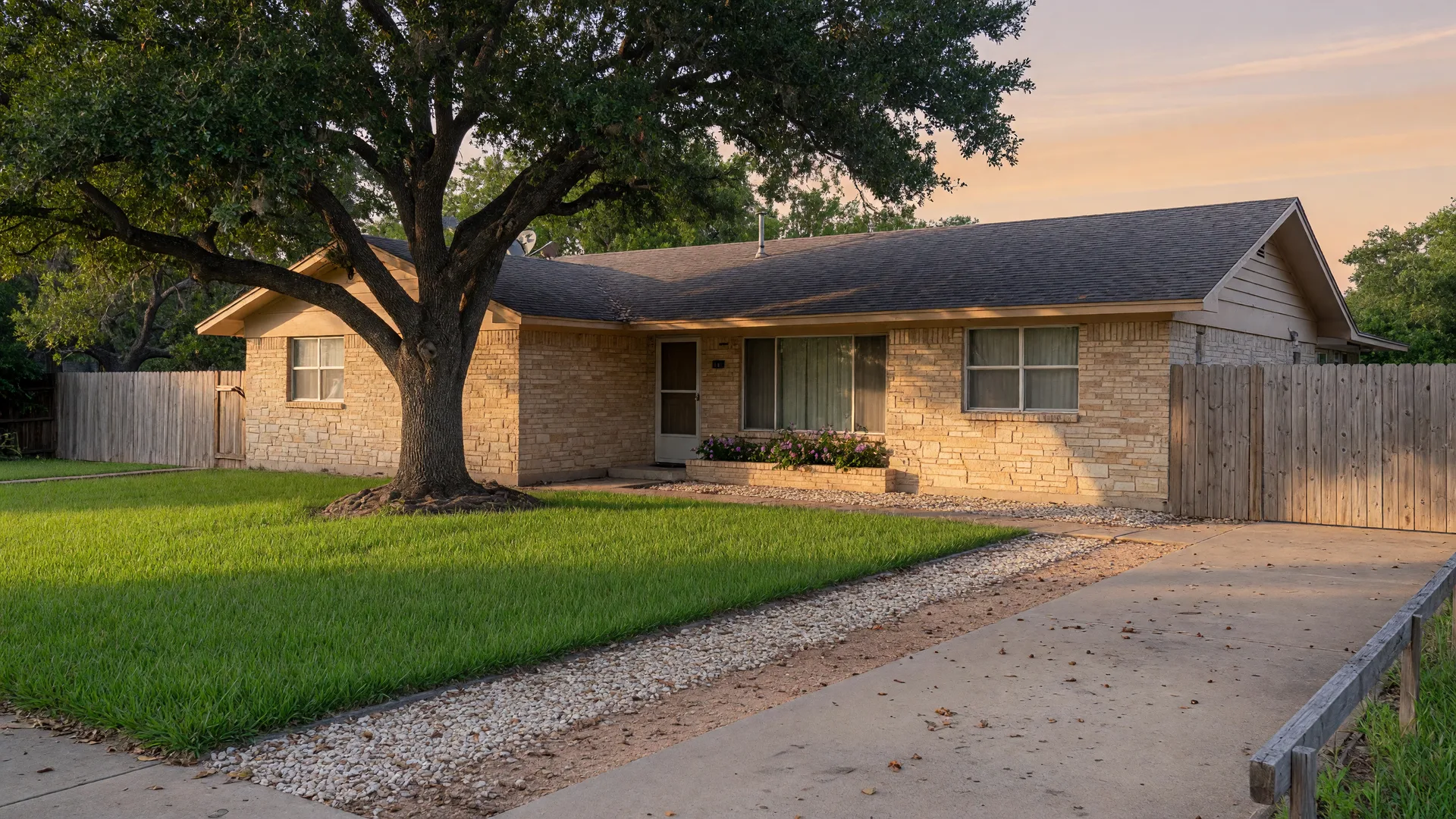
San Antonio sits on some of the most active soil in the country. Much of the city is built over expansive clay, the black and gray earth that swells when it rains and shrinks when it dries out. When that soil moves, the slab beneath the house moves with it, which is why hairline cracks, sticking doors, and crooked window openings show up in almost every home here eventually. This note is about what those cracks actually mean, when a crack deserves attention, and what an inspection can and cannot tell you about a foundation.
Why the ground under San Antonio moves
The clays beneath the city behave like a slow sponge. Give them a good soak, and they expand and push upward. Leave them high and dry through a long Texas summer, and they shrink and pull away, leaving a gap beneath part of the slab. The same house can sit a little differently in a wet spring than it did in a dry August. Most of the time that movement is small and the structure tolerates it fine. The trouble starts when part of the slab moves and the rest stays put, because that twist is what cracks concrete, binds doors, and opens zigzag lines in the brick.
What an inspector looks at
A home inspection is a visual, non-invasive look at the property, and the foundation section follows that same rule. I work my way around the full perimeter and through every room, checking drainage and grading outside and keeping an eye out for these warning signs inside:
- Stair-step cracks in brick or stone veneer and gaps where the siding meets a window or door frame
- Interior cracks around doors and windows, especially ones that are wider at the top or bottom
- Doors that stick, swing on their own, or no longer latch, and windows that have become hard to close
- Floors that slope or bounce and thresholds that pull away from the slab
- Moisture pooled around the foundation, gutters and downspouts emptying next to the house, and soil that slopes toward the slab
- Signs of past foundation work, like piers, leveling, or fresh patching, that tell you the house has been through this before
Cracks that are normal and cracks that are not
Here is the honest part. A single hairline crack in drywall is common in San Antonio, and most of them are cosmetic. Even a short stair-step crack in brick can stay perfectly stable for decades. What earns attention is change: a crack that keeps widening, a door that stops fitting, a floor that keeps sloping, or several of these signs showing up at once. That is when the report will point you toward a structural engineer.
And that is the system working, not the inspection falling short. A Texas home inspection is visual and it stays in its lane. It can tell you that movement is happening and where it shows up, but a structural engineer is the person who measures, monitors, and gives a definitive answer about whether a foundation needs repair. A good agent and a good inspector hand that off without drama, and a good buyer takes the recommendation seriously.
Five habits that keep a slab calm
- Keep gutters and downspouts clear, and let them drain several feet away from the house
- Slope the soil so water runs away from the foundation instead of pooling against it
- In a long dry spell, run a soaker hose along the foundation a few times a week so the clay does not shrink too far
- Keep big, thirsty trees a sensible distance from the walls
- Watch for change: if a crack suddenly grows, a door jams that used to swing, or a new dip appears after a hard rain, that is the moment to call
The takeaway
Buying in San Antonio means buying a house that stands on live, moving ground. A good inspection tells you whether that movement has been kind to the house or whether it is trying to tell you something. If you are sitting in the option period with a crack on your mind, this is exactly what an inspection is for. Book yours, and get the straight story on the slab before you sign.
Christian Schmeis
Certified Professional Real Estate Inspector and owner of Rodeo Home Inspections LLC. Two decades in construction, now inspecting San Antonio’s homes full time.