
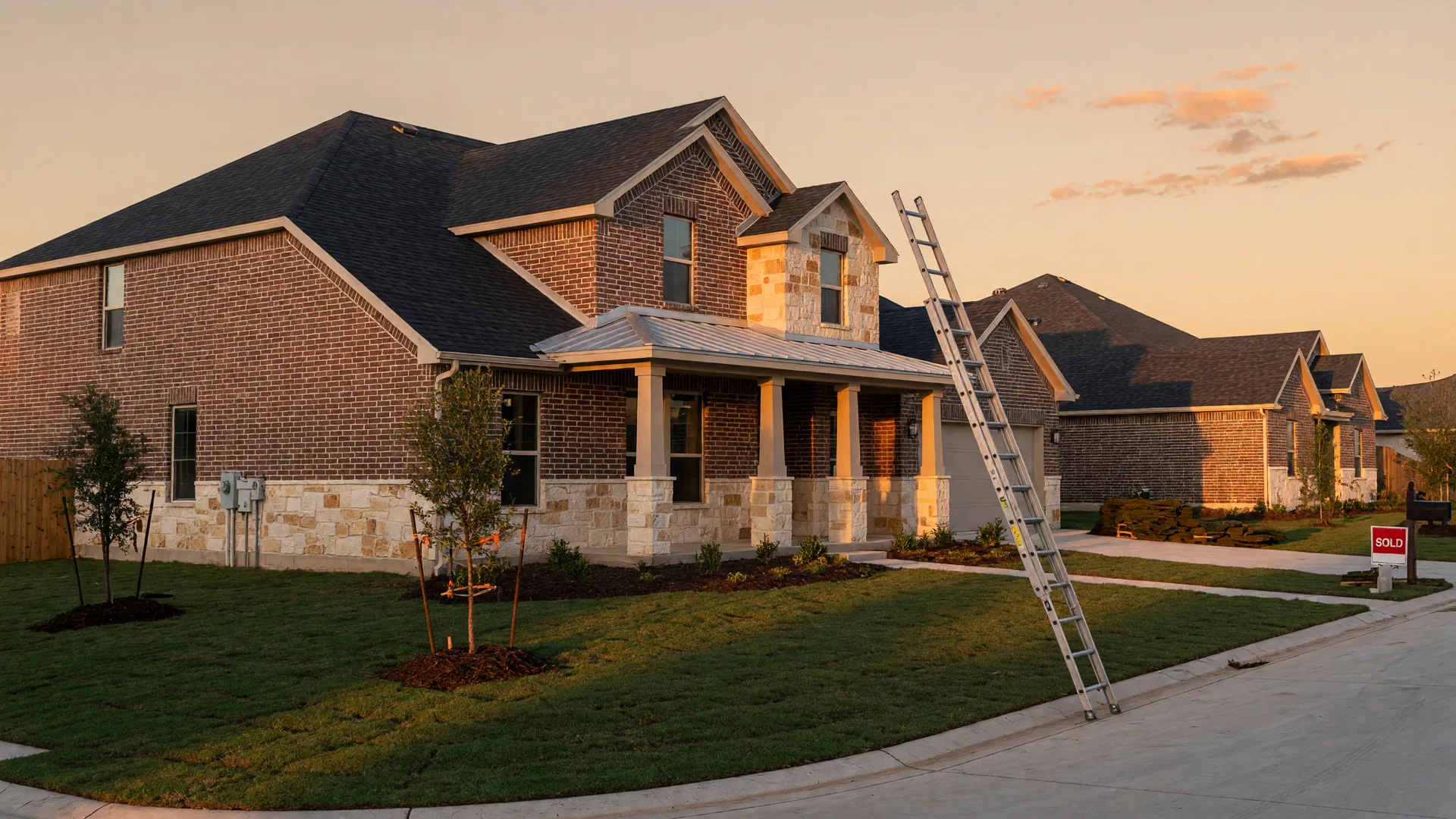
A brand-new house is not a perfect house. I say that as gently as I can, because buyers in San Antonio, Stone Oak, Boerne, and every new subdivision in between hear it all the time: the house is new, so it must be fine. It is not always fine. Builders are inspected by the city or county, but those are code checks, not buyer's inspections, and construction is done by people working on a schedule. In my inspections of new construction across the metro, I keep finding the same handful of defects over and over. Here is what common defects in new build homes actually look like, and which ones are worth handing to the builder before you close. I am Chris Schmeis of Rodeo Home Inspections LLC, Texas Professional Inspector License #27234-PI, and I inspect every house on this list myself.
The Most Common Defects in New Build Homes
Every new build is different, but the list of common defects in new build homes is remarkably consistent. Across the subdivisions of Stone Oak, Schertz, Cibolo, Boerne, and New Braunfels, I keep finding the same eight things:
- Roof flashing and drip edge details that were rushed, which is how water finds its way behind new siding
- HVAC systems installed but never commissioned, so the cooling runs weak or the ducts never got sealed
- Plumbing that was never fully pressure tested, with leaks that only show up after closing
- Foundations poured before the ground was prepared right, on the same expansive clay that moves every slab in San Antonio
- Attic insulation and ventilation short of the plan, which quietly raises the cooling bill every Texas summer
- Electrical items that pass a quick look but fail a close one, like loose terminations and missing supports
- Drywall cracks, nail pops, and trim gaps that appear in the first year as the house settles
- Grading that slopes toward the foundation instead of away from it
Roof Flashing and Drip Edge: Where Water Gets In First
The roof is where I find the most expensive shortcuts. New shingles look great from the street, but the details underneath decide whether the roof lasts twenty years or five. I check the flashing at the valleys, the chimney, and the wall intersections, the drip edge at the eaves, and the way the underlayment was laid. On new builds I regularly find nails driven too high or too low, flashing that stops short, and drip edge that was skipped for a stretch of eave. None of it shows from the ground, and all of it lets water work its way in over time.
HVAC That Was Never Commissioned
A brand-new air conditioner can still be an undersized, poorly installed one. Commissioning means the system was actually started, tested, and balanced: the refrigerant charge verified, the airflow measured, the ducts sealed and connected. I find new systems where the condenser is undersized for the house, where the duct boots were never sealed at the register, and where the condensate line drains somewhere it should not. In a San Antonio summer, those defects are not cosmetic. They are your comfort and your electric bill.
Plumbing That Was Never Fully Tested
New plumbing is usually fine, until it is not. The supply lines and drains are tested at rough-in, but the finished system deserves a full test too: every fixture running, every drain holding water, and the water heater installed with the right relief valve and pan. I have found shutoff valves that leaked on first use, a drain joint behind the wall that was never glued, and a water heater vent not connected the way the manufacturer requires. Most of it is fixable in an afternoon. All of it is easier to fix before closing than after.
Foundations and Grading on Texas Clay
San Antonio builds on expansive clay, and new builds are not exempt. The ground moves as it dries and rewets, and a slab poured on poorly prepared soil moves with it. I look at the grade around the house first, because water should always drain away from the foundation, and I look at the slab for cracks that show up before the house is even finished. In the newer sections of Stone Oak, Schertz, and Cibolo, the houses are still finding their footing, and the first few years of settling are normal. What is not normal is a foundation poured on fill that was never compacted, or a house graded so the rain runs toward the slab.
The Cosmetic Stuff That Still Matters
Drywall cracks, nail pops, and trim gaps are the defects buyers notice first, and they are the easiest to wave off. I would not wave them off entirely. A house settles in its first year, and a certain number of cracks is normal, but a wall of nail pops or a door that will not close straight can point to framing that was never nailed off right or lumber that was not dry. The builder's warranty covers most of it if you catch it in time, which is exactly why the month 11 warranty inspection exists.
What New Builds Look Like Across the San Antonio Metro
The defects repeat, but the context changes with the miles. In Stone Oak and the master-planned communities, the volume is new construction, so the list above shows up constantly. In Schertz and Cibolo along the I-35 corridor, the same builders are putting up the same houses at the same pace. In Boerne, Bulverde, and the Hill Country, the ground turns to limestone and caliche, which brings its own grading and drainage questions, and the bigger custom homes come with longer duct runs and more complex roofs. Around Canyon Lake and down in New Braunfels, the water table and the rivers keep the soil moist, and the humidity tests the flashing and the HVAC harder. And in Alamo Heights and the inner loop, the new builds are infill on old lots, which brings its own grading surprises. Same standard, different context.
The Takeaway
Common defects in new build homes are not a reason to panic, and they are not a reason to skip the inspection. They are a reason to look closely before you sign, and to use the builder's warranty while it still means something. Buyers who inspect a new house before closing, and again near month 11, almost always get the builder to fix the real stuff. Buyers who assume new means perfect usually end up paying for it themselves.
Want the full story on why new construction deserves an inspection at all? We wrote the longer version here. read why new construction still needs an inspection
Ready to put a fresh set of eyes on your new build? Call (210) 951-9357, email info@rodeoinspections.com, or pick your time. Book your inspection here
Christian Schmeis
Certified Professional Real Estate Inspector and owner of Rodeo Home Inspections LLC. Two decades in construction, now inspecting San Antonio’s homes full time.