
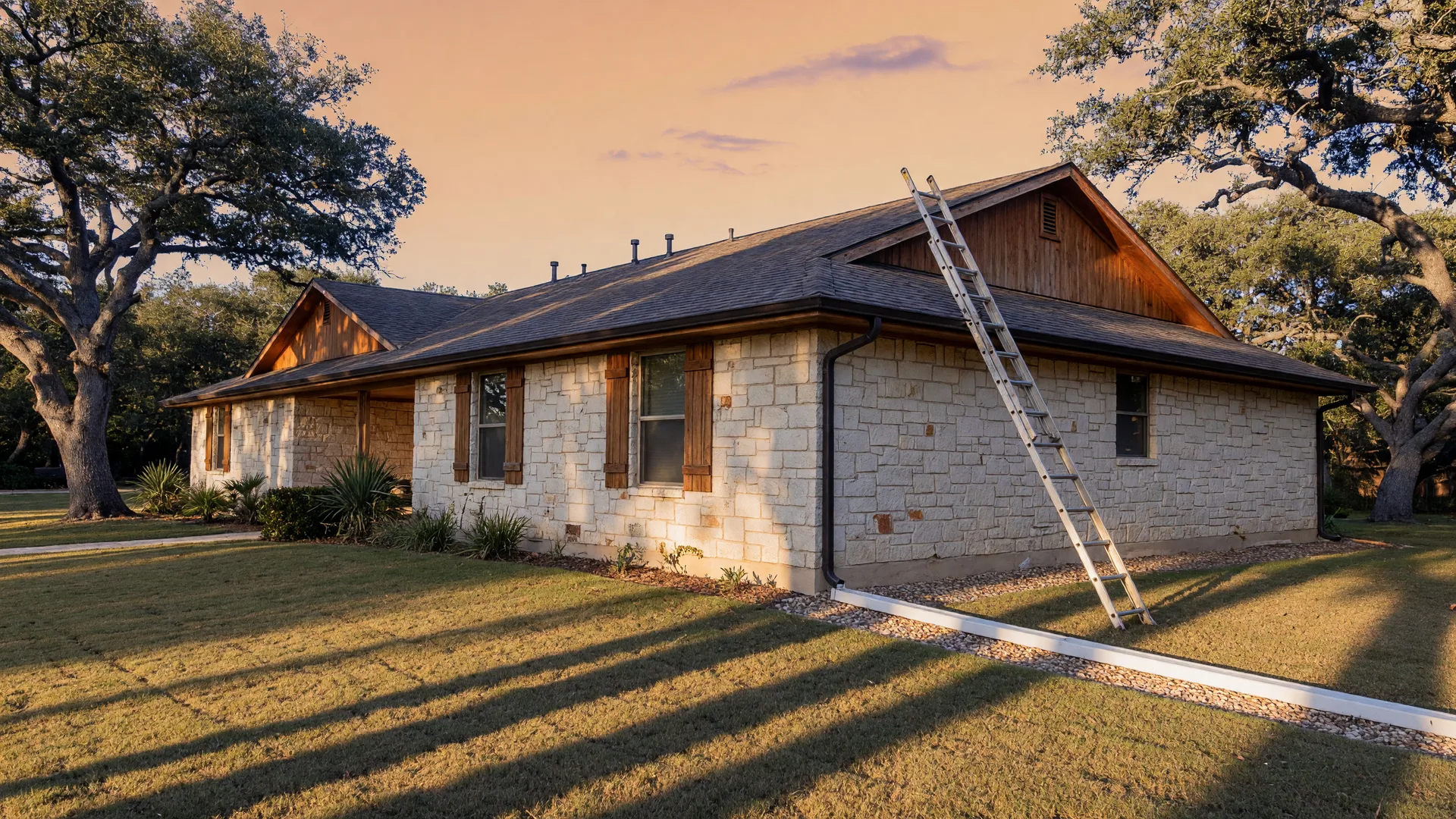
Every home buyer deserves a checklist. Here is ours, the 15 things Rodeo Home Inspections LLC looks for on every single-family house in San Antonio: the roof, the foundation, the electrical system, the plumbing, and a dozen more places where problems like to hide. Print it, bring it along, and use it to follow your inspector around the house. If you know what to look for, a two-hour inspection turns into an education.
Start outside, at the top
- The roof: walk the roofline and look for curled, cracked, or missing shingles, rusted flashing around chimneys and vents, and granules collecting in the gutters. Granules are the shingles talking, and too many of them mean age.
- The foundation: look for stair-step cracks in brick and block, doors that stick, and gaps between the floor and baseboards. Serious foundation movement is one of the most expensive repairs a house gets, so take it seriously.
- Grading and drainage: the ground should slope away from the house on every side, and downspouts should carry water well clear of the foundation. Water that pools against a slab for years is how cracks start.
The systems that keep the lights on
- The electrical panel: check the brand, the age, and how the breakers are wired. Double-tapped breakers, scorch marks, and a panel that hums or buzzes deserve attention before closing day.
- Outlets and GFCIs: test several outlets in every room, and push the test button on each GFCI in the kitchen, bathrooms, and garage. An outlet that does not hold a plug, or a GFCI that will not trip, is a safety item, not a nitpick.
- Plumbing and water pressure: run every faucet hot and cold, flush every toilet, and look under each sink for leaks, corrosion, or repairs done in a hurry. Weak pressure can mean a real problem with the supply line.
- The water heater: note the age, look for rust and moisture around the base, and check the temperature-pressure relief valve and the drain pan. A water heater in its last couple of years is a budget item you want to know about now.
Comfort and air
- HVAC age and condition: find the year on the condenser and furnace, ask about the service history, and watch the system run a full cycle. In San Antonio, air conditioning is not a luxury, it is a requirement, and an old unit has a limited life.
- Windows and doors: open and close every one. Look for cracked seals, foggy double-pane glass, broken locks, and weatherstripping that has given up. A house full of drafty windows will cost you every summer.
- Insulation and ventilation: check the attic for insulation depth, proper venting, and bathroom fans that exhaust outside instead of into the attic. Skimping here shows up quietly, in your electric bill.
Look for the damage that hides
- Signs of water damage: staining on ceilings and walls, bubbling paint, warped wood, and that musty smell that no air freshener can beat. Water finds its way through roofs, walls, and floors, and it always leaves a trace.
- Pests and termites: look for mud tubes along the foundation, droppings in the attic, and wood that sounds hollow when you knock. Texas has a long list of bugs that like to move in, so this is not a box we skip.
Make the inspection yours
- Attend the inspection: be there, follow along, and see the house through fresh eyes with your inspector. Two hours with a good inspector teaches you more about that house than any listing will.
- Ask questions: an inspection is a conversation, not a lecture. Ask what each finding means, how urgent it really is, and roughly what it would cost to fix. Chris answers every one of those questions, on site and after the report lands.
- Use the report to negotiate: sort the findings by price and priority, and hand the big ones to your agent while the option period is still open. The checklist does not end at the front door; it ends at the negotiation table.
That is the 15-point tour. Every house carries some Good, some Bad, and a little Ugly, and our job is to tell you which is which before you buy. When you are ready, book your San Antonio inspection with Rodeo Home Inspections LLC and bring this checklist along, because we inspect houses the way we would want ours inspected: slow, thorough, and straight to the point.
Christian Schmeis
Certified Professional Real Estate Inspector and owner of Rodeo Home Inspections LLC. Two decades in construction, now inspecting San Antonio’s homes full time.