
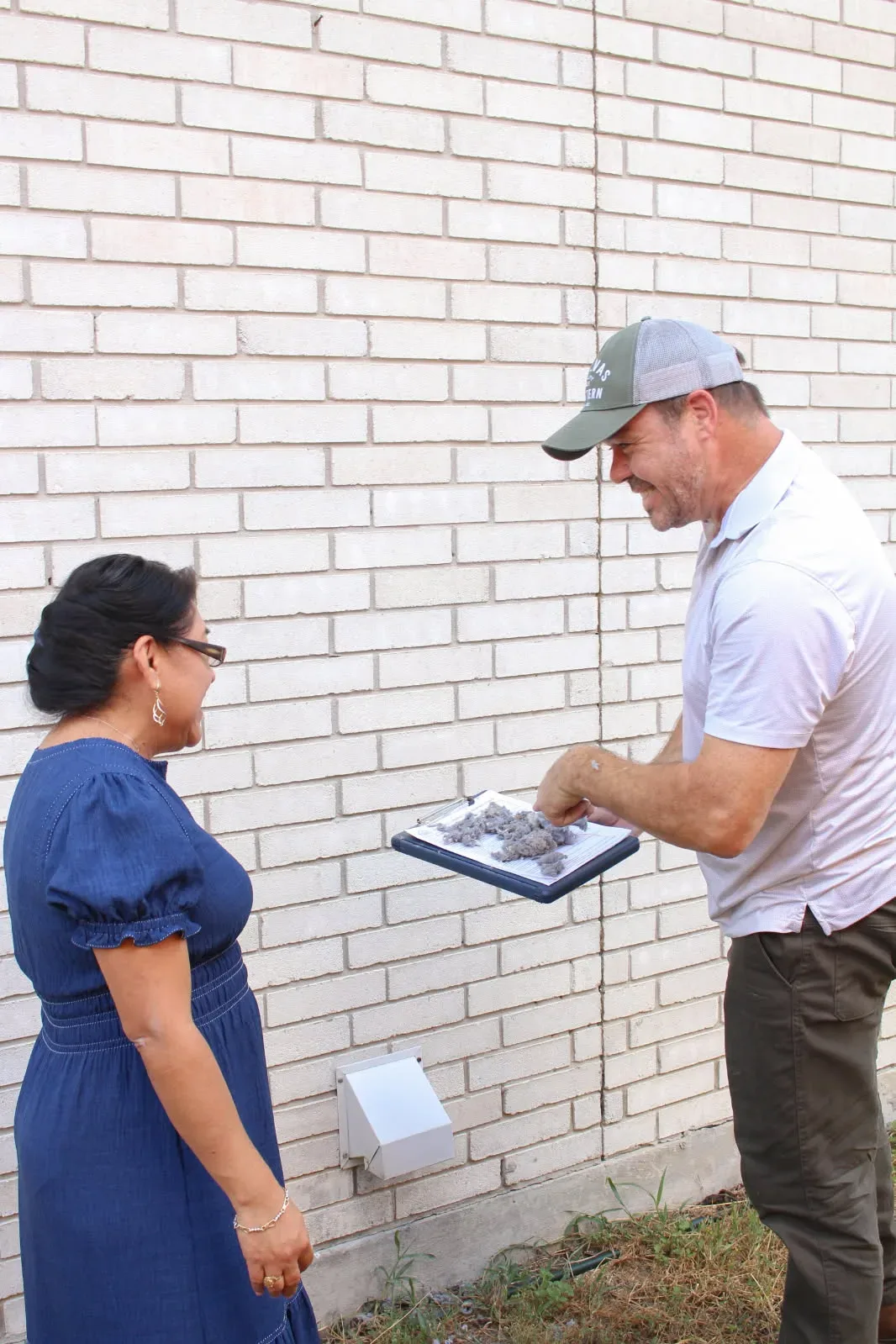
A termite and wood-destroying insect inspection in Texas is a careful visual check for the pests that eat a house from the inside out: termites, carpenter ants, carpenter bees, and wood-boring beetles, plus the damp, wood-to-soil conditions that draw them in. Lenders order it as a separate report from the full home inspection, and on many San Antonio purchases, especially VA and FHA loans, it is required before closing. Here is what the inspection actually covers, what the two report forms mean, and why every buyer in the Hill Country and across the metro should know the difference.
What a Wood-Destroying Insect Inspection Covers
A WDI inspection is a visual inspection, and it is thorough within its limits. I walk the entire perimeter of the house and check every area where wood sits close to the ground or where moisture collects: the foundation and crawl space, the attic framing, the underside of decks and porches, the window and door framing, and anywhere the siding or trim touches soil. The goal is to catch the telltale signs before they turn into a five-figure repair.
- Mud tubes on foundation walls, piers, or floor joists, the little highways subterranean termites build
- Wood that sounds hollow when tapped, or framing that looks eaten, sagging, or crumbling
- Frass, the fine sawdust-like droppings that drywood termites push out of their tunnels
- Carpenter bee holes and galleries in exposed wood, or the fine sawdust trails carpenter ants leave behind
- Conditions conducive to infestation: moisture problems, wood-to-soil contact, or old repairs that were never treated
The Two Report Forms You'll See in Texas
In Texas, the report is written on the state's Official Wood Destroying Insect Report, form SPCS/T-5, and it documents whether wood-destroying insects are present and whether the structure has conditions that invite them. For a VA or FHA loan, the lender usually asks for the national NPMA-33 form instead. Both are what they sound like: a snapshot from a visual inspection, not a guarantee against hidden or future damage. If a pest has already settled in behind the drywall, no inspector can promise to see it, and the report says so. That honesty is exactly why you want the report now, during the option period, while you can still negotiate.
Why Order a Termite and Wood-Destroying Insect Inspection in Texas
South Texas is kind to termites. The warm, humid climate keeps colonies active year-round, and subterranean termites are the most common and the most destructive kind we deal with in San Antonio. An acre of Texas soil can hold several colonies, and they reach a house through the smallest crack in the slab or a floor joist resting on damp dirt. That is why the report matters even on a house that looks clean: by the time the damage is visible, the colony has usually been working for years. The full home inspection looks at structure and systems; the wood-destroying insect report takes the extra, specific pass that tells you whether wood-eating pests are part of the deal.
In my book, every buyer should add it, and the reasons stack up from Alamo Heights to Stone Oak. Older homes in Alamo Heights and Monte Vista often sit on pier-and-beam foundations with plenty of wood near the ground. Newer construction in Stone Oak, Bulverde, and Schertz rests on slabs, but termites still find the gaps. Up in Boerne and the Hill Country, around Canyon Lake and New Braunfels, the treed, moister lots invite carpenter ants and wood-boring beetles. And in Cibolo, Live Oak, and everywhere in between, a concrete slab only helps if the wood above it stays dry. Same insects, same report, no matter the ZIP code.
How a WDI Inspection Differs From the Full Home Inspection
They are separate inspections, separate reports, and in Texas they sit under separate rules. The full home inspection follows TREC's Standards of Practice and covers the whole house: the structure, the roof, the electrical, the plumbing, the HVAC, and everything in between. The WDI report is a focused look at one risk: wood-destroying insects and the conditions that feed them. It is not a replacement for the full inspection, and the full inspection does not double as a WDI report. The cleanest way to handle it is to add the WDI report to your full inspection and get both answers in one appointment.
What Happens If the Report Finds Something
Finding a sign on a WDI report is not a dealbreaker, and it is not a reason to panic. It is a reason to act before closing. If the report shows active infestation, the usual move is to have a licensed pest control company treat the house, get a written bid, and negotiate the treatment and any wood repair into the deal. If it shows old damage with no active pests, that is often just a matter of replacing a section of wood and keeping it clear of the ground. What you never want is to waive the report and find out later, after the keys are yours, that the colony you could have negotiated away is now your repair.
The Takeaway
A termite and wood-destroying insect inspection in Texas is cheap insurance with a very specific job: it tells you whether the wood under that fresh paint is sound. Lenders ask for it on many purchases, and even when they do not, buyers are wise to ask for it anyway, from Alamo Heights to Boerne to New Braunfels. Add it during the option period, read the report for what it is, and if something shows up, you handle it before you close instead of after.
Booking a full inspection? Ask for the wood-destroying insect report as an add-on and get both answers in one appointment, anywhere across the San Antonio metro, from Alamo Heights and Stone Oak to Boerne, New Braunfels, Canyon Lake, Schertz, and Cibolo. Book your inspection
Christian Schmeis
Certified Professional Real Estate Inspector and owner of Rodeo Home Inspections LLC. Two decades in construction, now inspecting San Antonio’s homes full time.