
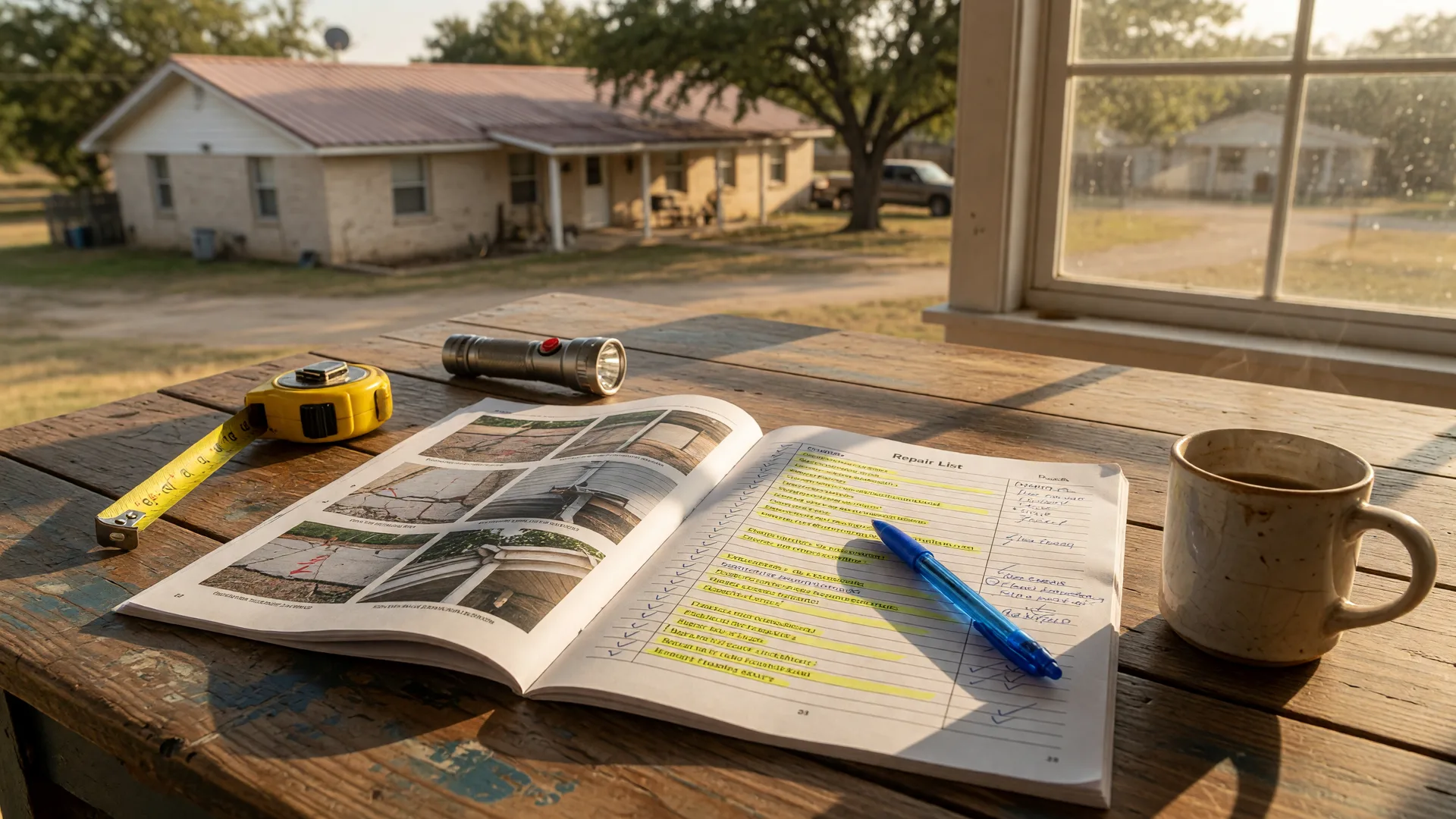
The inspection report lands in your inbox and suddenly the house you loved has a list. That list is not bad news, it is leverage. Negotiating repairs after a home inspection is how Texas buyers turn what the inspector found into a better deal, and it all happens inside your option period. This guide is the straight version of how to do it: what to ask for, what to let go, and how to keep the conversation friendly instead of adversarial.
Your option period is the negotiating window
In Texas, the option period is the stretch of days, usually seven to ten, when you can back out of the contract for almost any reason. It is also the window when repair negotiations happen. The clock starts the day you sign, so the inspection needs to happen early in that window, and the request needs to go out while you still have time to walk away. That leverage is the whole game: the seller knows you can leave, so they have a reason to say yes to reasonable requests. Whether you are buying in Stone Oak, Boerne, New Braunfels, or anywhere across the metro, the calendar works the same way.
What the report actually gives you
A good report sorts itself by priority. Safety issues first, then structural and system problems, then the small stuff. When you sit down to negotiate, read it that way. The report is also your evidence: photos, locations, and plain-English explanations you can hand to the seller's side without translating. Most sellers expect this. A clean, well-documented request reads as serious, and it gets taken seriously.
How to negotiate repairs after a home inspection
Here is the process I watch work, week after week, from Alamo Heights to Canyon Lake:
- Send the seller the relevant pages of the report with a written repair request during the option period, not after it
- Group findings into must-fix and nice-to-have, and lead with the must-fix items: safety, water intrusion, structural, and major systems
- Use the standard TREC forms your agent provides, so the request is clear and enforceable
- Give the seller a choice when you can: fix it, credit you at closing, or adjust the price
- Keep the tone practical. You are asking for a house that works, not a free renovation
What to ask for, and what to let go
The repairs worth negotiating are the ones that protect the house and your wallet: a roof near the end of its life, a failing water heater, electrical issues the inspector flagged, plumbing leaks, foundation movement, and anything that lets water in. Cosmetic stuff, dated finishes, and normal wear are not negotiations, they are part of buying a used house. The line is easier to hold when you remember the goal: a safe, sound home you can afford to maintain, not a perfect one.
Three ways buyers usually play it
- Ask the seller to complete the repairs before closing, with receipts and a re-inspection to confirm the work
- Take a credit at closing and handle the repairs yourself, on your own schedule and with your own contractor
- Negotiate the price down to reflect the cost of the work, especially for bigger items like a roof or foundation work
Each works, and the right one depends on the house, the seller, and your timeline. In fast-moving markets like Schertz and Cibolo, sellers often prefer a credit because it closes faster. In the Hill Country around Bulverde and Boerne, where houses sit on bigger lots with wells and septic, the conversation tends to be about systems and the life they have left.
When the answer is no, or the list is long
Sometimes the seller says no, or the repairs they offer do not match what the report found. That is when you decide: accept the house as it is, ask for a different form of compensation, or walk away during the option period. A report full of safety and structural issues, like active foundation movement or a roof that needs replacing, is a fair reason to use your option and keep looking. The inspection is not there to kill the deal, it is there so you choose the deal with your eyes open.
The takeaway
Negotiating repairs after a home inspection comes down to three things: inspect early in your option period, ask for what matters with the report as your evidence, and stay ready to walk if the numbers do not work. Do that and you will end up in a house you know, at a price that reflects what it really needs. If you are under contract right now, the first step is getting the inspection done while your window is still open.
Under contract in San Antonio, Boerne, New Braunfels, or anywhere across the metro? Get the report that gives you the leverage to negotiate. Book your inspection
Christian Schmeis
Certified Professional Real Estate Inspector and owner of Rodeo Home Inspections LLC. Two decades in construction, now inspecting San Antonio’s homes full time.