
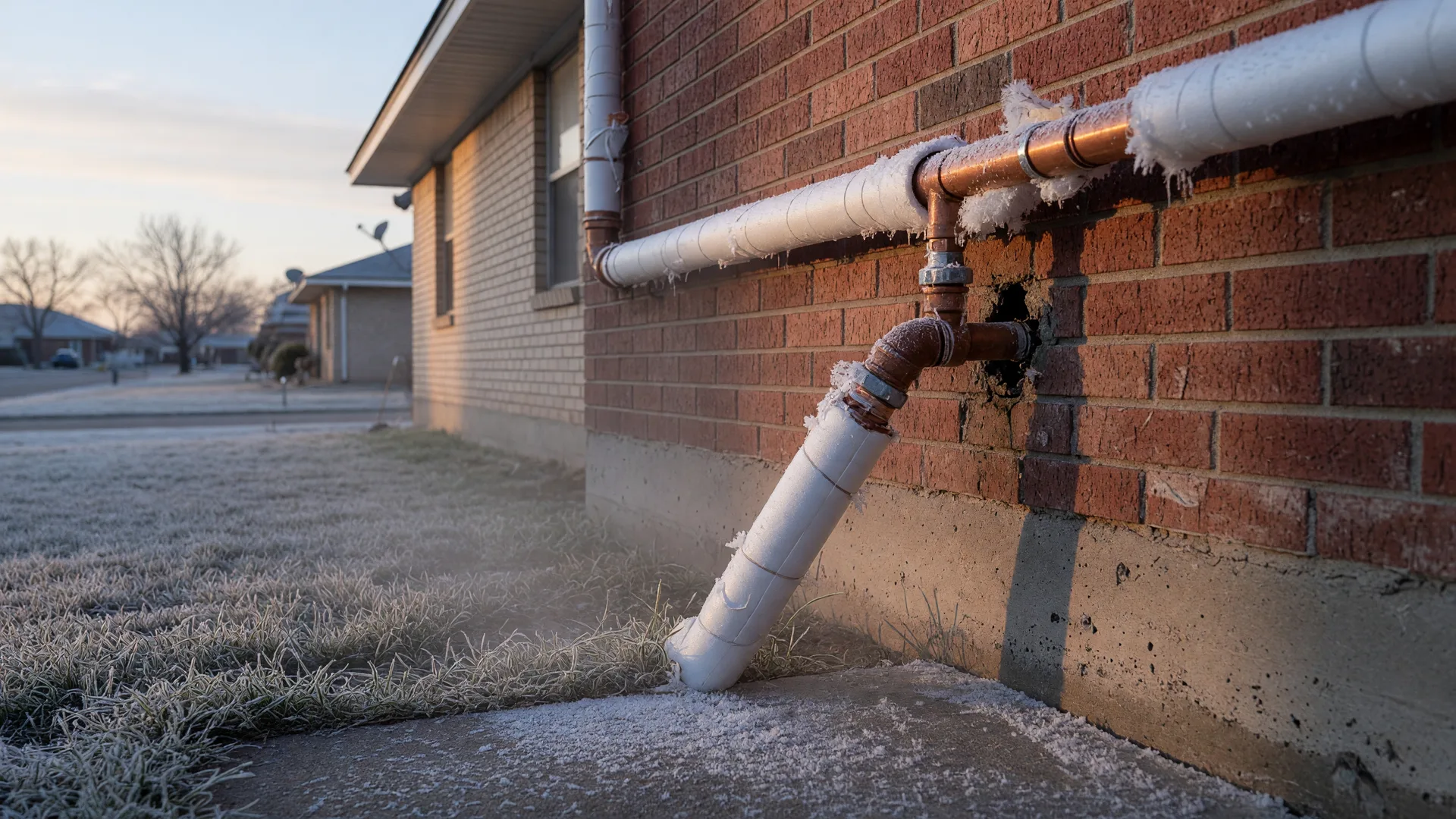
A San Antonio winter is usually short, but it only takes one hard freeze to remind everyone that Texas houses are not built like northern ones. When the temperature drops into the teens overnight, pipes along outside walls, in crawl spaces, and in unheated garages can freeze, expand, and split, and the damage shows up as a trickle that becomes a flood in the middle of the night. This note is about the freeze damage plumbing Texas homes actually face, which pipes are most at risk, and what to check the morning after the cold front moves through.
Freeze damage plumbing in Texas homes starts with one hard freeze
Texas construction is designed for heat, not cold. Supply lines run through attics, uninsulated garages, and exterior walls where house heat rarely reaches, and in a normal winter that is fine. It takes a genuinely hard freeze, the kind that dips below 20 degrees and stays there overnight, for standing water inside a pipe to freeze solid. Ice takes up more room than water, and when it expands inside a closed pipe, something has to give. The pipe splits, usually along the bottom where the ice pushes, and the real trouble starts when it thaws and water sprays out behind a wall.
Which pipes freeze first
Not every pipe is equal when the temperature drops. The ones that get hit hardest share the same pattern: they sit outside the house's conditioned space, where there is no heat to keep them warm. On a home inspection I note where those runs are, because that is where a freeze will strike first:
- Hose bibs and exterior spigots, the single most common freeze casualty, because they sit fully outside the house
- Supply lines in unheated garages, especially washing machine hookups and water heaters that live in the garage
- Pipes in exterior walls and under kitchen and bathroom cabinets that share a wall with the outside
- Attic runs of PVC and copper where the insulation stops at the ceiling line
- Crawl spaces and pier-and-beam floors, common in older homes from Alamo Heights to the Hill Country
The damage you cannot see until spring
Here is what makes freeze damage plumbing sneaky: the leak often does not show up the night of the freeze. The pipe cracks, the water stays frozen solid, and nothing drips until the thaw. Days later, when nobody is thinking about winter anymore, the split lets go and water runs into a wall or a floor. Buyers in particular need to know this, because a house that froze in February can hide the evidence until the option period in the spring, and the seller may genuinely not know.
What an inspector checks after a freeze
When I inspect a home after a hard winter event, or when a report needs to chase down the history of a freeze, here is what I look for:
- Water stains on ceilings, walls, and floors, especially near exterior walls and under bathrooms
- Buckled or lifted flooring, drywall that feels soft, and baseboards that have swelled
- Fresh paint or new drywall in odd patches, the classic sign of a repair after a leak
- The age and condition of shut-off valves and the main water shut-off, because you want to know where it is before you need it
- Exterior hose bibs and any exposed piping, looking for repair marks or replacement
Protecting pipes before the cold arrives
The good news is that a little preparation before a freeze goes a long way. If a hard freeze is in the forecast, San Antonio homeowners can protect the pipes in an afternoon:
- Disconnect garden hoses, drain the hose bibs, and cover them with insulated faucet covers or wrap them in towels
- Open the cabinet doors under sinks that sit on exterior walls so house heat reaches the pipes
- Let a faucet drip on the coldest nights, because a slow trickle keeps water moving and relieves the pressure
- Know your main water shut-off and keep it clear, because that is the first thing you grab if a pipe lets go
- If you will be gone overnight, set the thermostat no lower than 55 degrees and consider shutting off and draining the outdoor supply
When freeze damage shows up in a home inspection
Across the metro, the freeze story looks different by neighborhood. The older brick homes in Alamo Heights and the vintage ranches of the inner city often have pier-and-beam spaces and exposed runs that are first in line. Newer builds in Stone Oak, Schertz, and Cibolo are better insulated by code, but their garages and attic runs still freeze when the weather turns. Out in Boerne, Bulverde, and the Hill Country, well equipment and exposed rural lines need their own care, and homes around Canyon Lake and New Braunfels face the same cold fronts rolling down the rivers. Any of them can carry freeze damage plumbing that a good inspection, and a good look at the walls, can catch before you commit.
The takeaway
Freeze damage is rare in San Antonio, and most of it is avoidable, but when it happens it is expensive and it hides well. If you are buying, the inspection is where that history comes out, and if you own, twenty minutes before a cold front can save you thousands.
When you are ready to look at a house with fresh eyes, whether it just went through a freeze or it has been through a dozen, this is the moment to get the straight story. I will walk the whole place, pipes included: Book your inspection
Christian Schmeis
Certified Professional Real Estate Inspector and owner of Rodeo Home Inspections LLC. Two decades in construction, now inspecting San Antonio’s homes full time.