
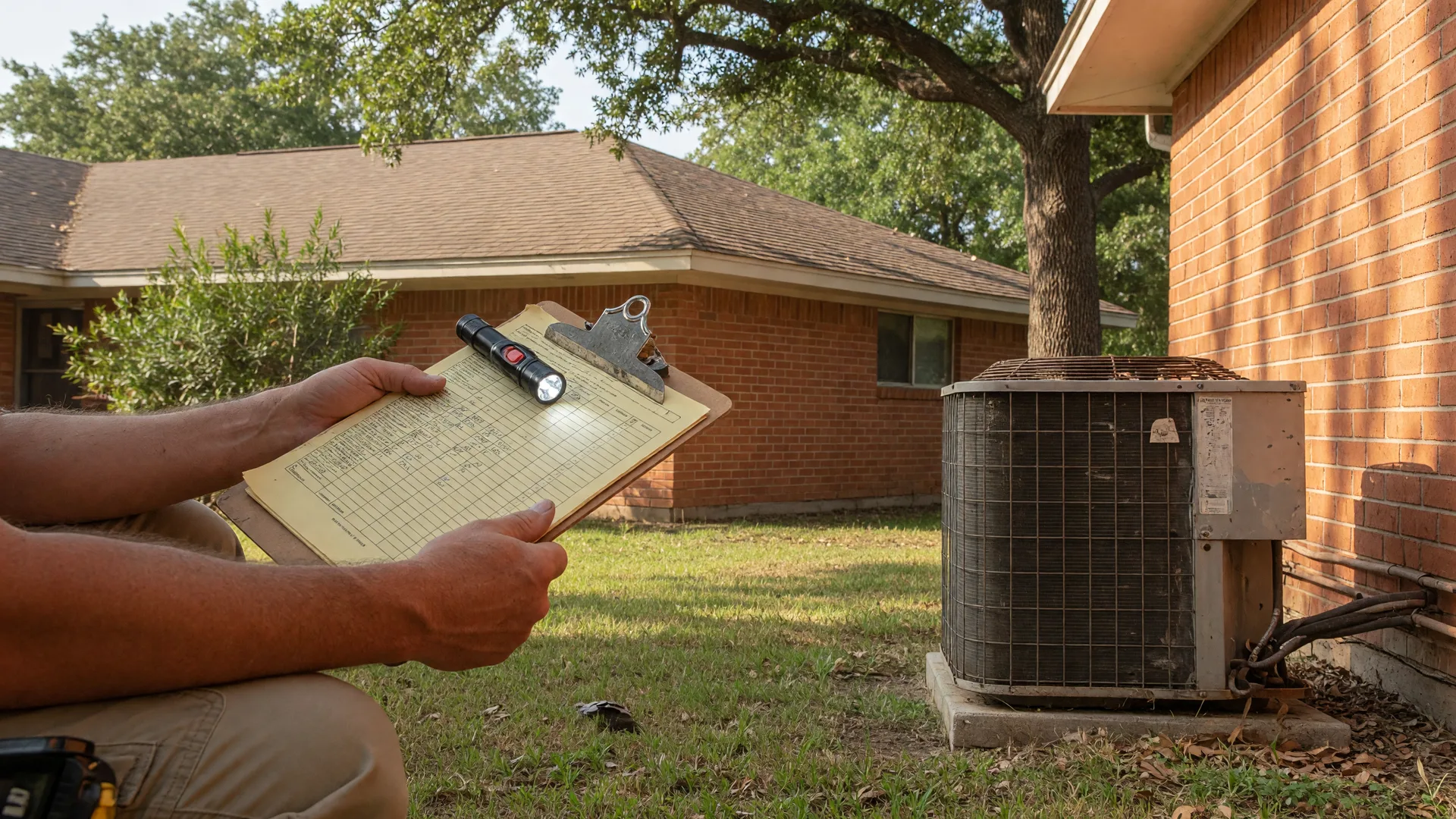
A 4-point inspection is a short, focused look at four systems and only four: the roof, the electrical system, the plumbing, and the HVAC. Texas insurance companies order them all the time, usually before they will write or renew a policy on a home past a certain age, because those four systems are where the big water, fire, and wind claims start. It is not a full home inspection and it is not meant to be, but if your insurer has asked for one, here is exactly what a 4-point inspection Texas homeowners get, what the inspector is looking for, and how it fits with the full inspection you should still get when you buy.
What a 4-Point Inspection Covers
A 4-point inspection checks four systems, and only four. The report is almost always written on a standardized form your carrier already knows how to read, and it documents the age, condition, and apparent life left in each one:
- Roof: the covering, the flashing, and the visible condition, plus an honest estimate of how much life the roof has left
- Electrical: the panel, the wiring, and the service capacity, with attention to anything aging, overloaded, or unsafe
- Plumbing: the visible supply and drain lines, the water heater, and any signs of leaks or past failures
- HVAC: the heating and cooling equipment, its age, and its apparent condition
Who Needs a 4-Point Inspection in Texas
The state does not require a 4-point inspection, and neither does TREC as part of a sale. Your insurance company does. Most carriers want one before they will write or renew a homeowners policy on a home past a certain age, commonly around 20 to 30 years old depending on the carrier, and they will ask again when you switch companies, take out a new policy, or buy a home without a mortgage. The report is basically an underwriting document: it tells the carrier how much risk sits in the roof, the wiring, the pipes, and the HVAC, and insurers typically accept one for one to three years before they want a fresh look.
How a 4-Point Inspection Differs From a Full Home Inspection
This is the part that matters most for San Antonio buyers. A 4-point inspection looks at four systems and nothing else. It does not check the foundation, the grading, the attic ventilation, the windows, the structure, or the hundred other items in a full inspection. When you buy a home in Texas, TREC's Standards of Practice apply to the buyer's inspection, so the full inspection is the one that covers the whole house for you. A 4-point is a narrow tool for the insurance desk, and it is no substitute for the full report when you are about to spend hundreds of thousands of dollars. If a seller hands you a recent 4-point and says the house is already inspected, that is true in a narrow sense, and it is still worth a full inspection.
What the Inspector Looks For on a 4-Point
I read the four systems the way any good inspector does, with a little extra attention to what carriers care about, because a 4-point that comes back clean is worth more than one that sends your policy into underwriting. On the roof I am looking at age, condition, and how much life is left. On the electrical side I am looking at the panel, the wiring, and whether anything looks overloaded or unsafe. On the plumbing side I am looking at the water heater, the visible supply and drain lines, and any signs of leaks. And on the HVAC side I am looking at the age and condition of the equipment. The four systems are the same across Texas; the houses they sit in are not.
What It Means for San Antonio Homeowners
San Antonio is a city of older homes and of newer homes aging fast, so 4-point requests come up across the whole metro. A 1960s ranch in Alamo Heights or Monte Vista is a classic candidate, and so is a 1990s build in Stone Oak or Bulverde that has quietly crossed the carrier's age threshold. Up in Boerne and the Hill Country, around Canyon Lake, in New Braunfels, Schertz, and Cibolo, the same rules apply: once the roof and the systems pass a certain age, the insurer wants a look before they renew. The good news is that a 4-point is a quick, affordable appointment, usually under an hour, and the conditions that cause trouble are almost always the same few: a roof past its life, aging wiring, an old water heater, or an HVAC system on its last legs. Knowing that before the carrier asks is worth a lot.
The Takeaway
If your insurance company asks for a 4-point inspection, it is a routine paperwork step, not a warning about your house. Get it done by a licensed inspector, read the report for what it is, and keep in mind that a clean 4-point tells the carrier the four high-risk systems are in acceptable shape, while a full inspection tells you about the whole house. In San Antonio, the homes that get the most requests sit in the older neighborhoods and the aging suburbs alike, from Alamo Heights to Stone Oak, and a straight read on both reports is exactly what a home inspector is for.
Need a 4-point inspection for your insurer, or a full inspection for the house you want to buy? I inspect the whole metro, from Alamo Heights to Stone Oak, Boerne, New Braunfels, Canyon Lake, Schertz, and Cibolo. Book your inspection
Christian Schmeis
Certified Professional Real Estate Inspector and owner of Rodeo Home Inspections LLC. Two decades in construction, now inspecting San Antonio’s homes full time.